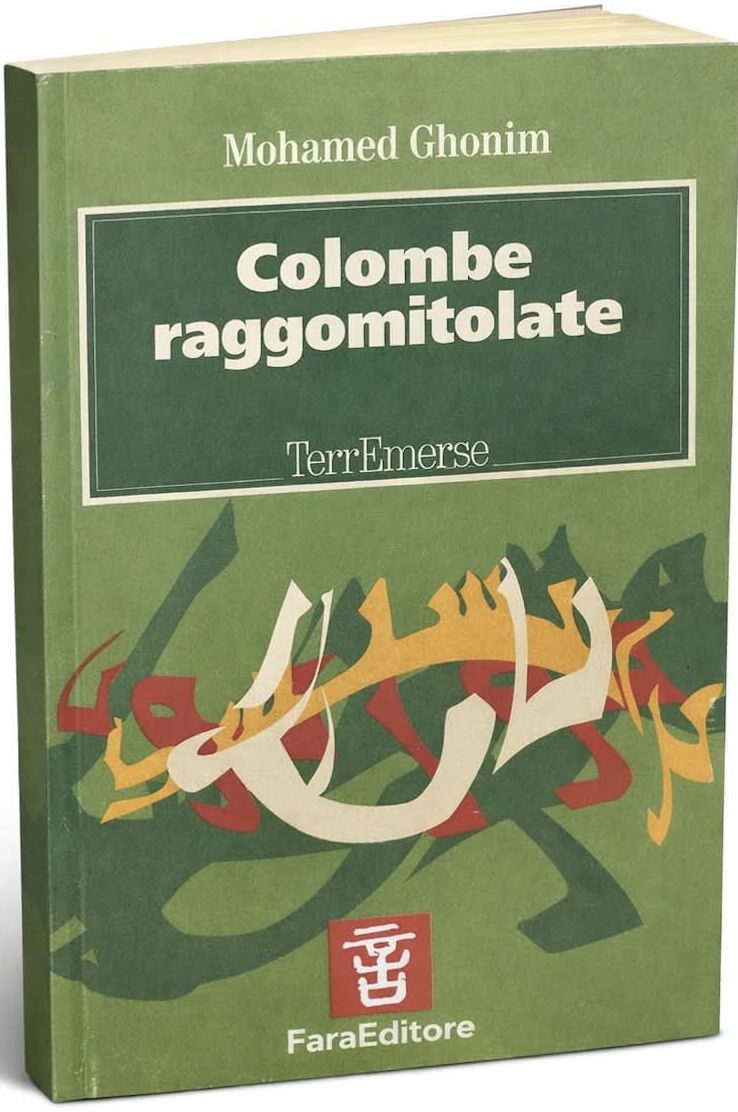
A poetry collection crossing love, memory, migration and identity, turning words into a bridge between East and West.
Colombe Raggomitolate, published by Fara Editore in 2003, is one of Mohamed Ghonim’s most significant poetry collections. Through intense, symbolic writing, the author reflects on memory, love, identity and human dignity, portraying a passion for life, the value of encounters and the complexity of separation.
The collection includes the sequences Il canto dell'amore, Woman e Versi Migranti, forming a poetic journey that unites personal experience and universal reflection. A son of Egyptian culture deeply rooted in Italian life, Ghonim brings the rhythms, images and sensibility of Eastern poetry into Italian, creating a dialogue between East and West.
In his verses, the concrete and the visionary, personal experience and universal themes coexist: love, migration, solitude and the search for identity become symbols of the human condition. Poetry thus becomes a means of encounter, hope and understanding among different peoples and cultures.
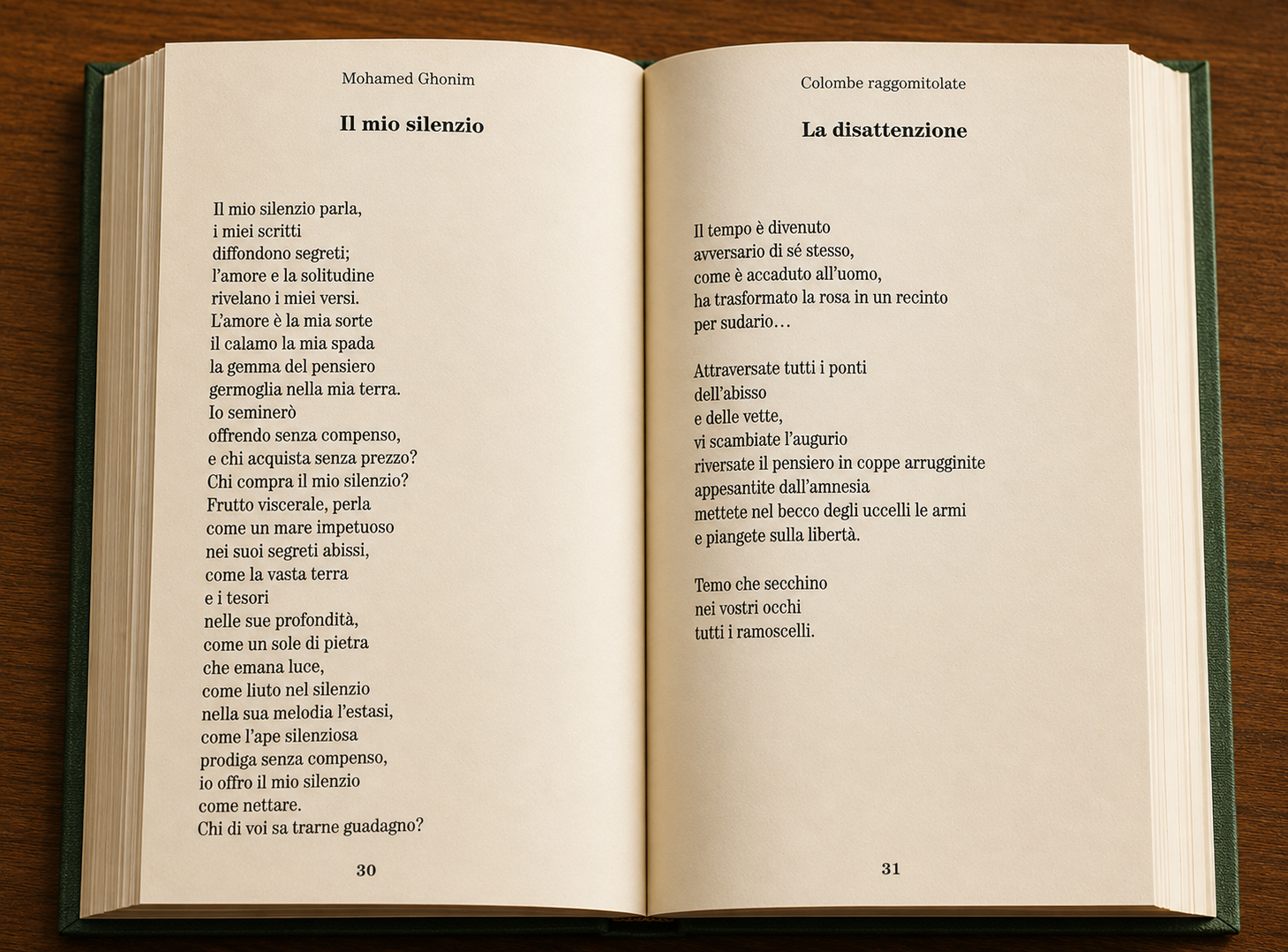
Critical voices have accompanied Colombe Raggomitolate, recognizing its symbolic depth and its capacity to unite cultures, memory and the human quest.
“Reading in Italian verses originally written in other languages is the gift Mohamed Ghonim has given his readers. Words acquire new force, becoming a metaphor for the countless emotions of everyday existence.”
D'Alessio interpreta Colombe Raggomitolate as a poet’s journey through memory, identity and the search for origins. The dove’s purity becomes a symbol of poetry, able to mend separations and transform personal experience into a universal reflection on humanity.
Through images from Egyptian and Eastern culture, Ghonim portrays the pain of distance, the fragility of existence and the desire for encounters among different peoples and cultures.
“Only love can make our condition beautiful.”
The dove’s purity and the power of words become metaphors for an inner journey toward knowledge, love and human dignity.
“For his literary work, a mirror reflecting the mysterious magic of being and of thought born in the soul.”