CRITICAL RESPONSE
Critical readings of the work
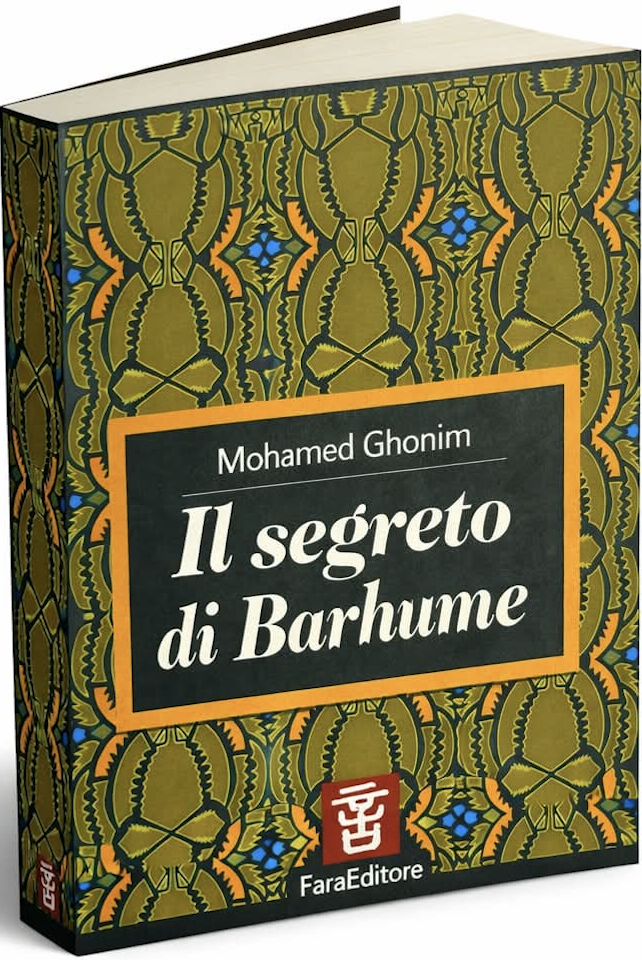
Il Segreto di Barhume has been interpreted as a novel that blends storytelling, philosophy and symbolism, addressing intercultural dialogue and the conflict between good and evil through intense, visionary writing.
“Mohamed Ghonim conveys a philosophical concept through his poetic soul, creating a language that transforms the novel into a path of reflection on humanity and its destiny.”
Ahmed Shablul sees Barhume’s journey as a great allegory of the relationship between East and West, the global North and South. The protagonist crosses real and symbolic places, but above all undertakes an inner path toward knowledge, freedom and the discovery of his roots.
According to the critic, the novel addresses universal themes including ignorance, fear, power, scientific progress and human responsibility for one’s choices, offering readers multiple levels of interpretation.
Ahmed Shablul
Poet and literary critic
In Il Segreto di Barhume, Mohamed Ghonim offers an allegorical portrayal of the contemporary human condition, marked by contradictions, injustice and the inner conflict between evil and the possibility of good.
Every person carries within a “man of mud,” symbolizing violence, indifference and life’s shadows, but also a white point, like a pure dove, representing hope, love and the capacity for redemption.
Barhume’s journey becomes a path through his inner self, a search for humanity’s deepest roots. The characters he encounters represent different aspects of the human condition: fear, solitude, the desire for freedom and the need to recover an authentic meaning in life.
In a place suspended between reality and symbolism, Ghonim creates a universal tale where East and West meet. Self-knowledge becomes the first step toward understanding others and transforming cultural difference into an opportunity for dialogue and growth.
Barhume’s path ultimately reveals that true happiness arises from reconciliation with one’s conscience and the rediscovery of the trace of humanity within every individual.
Claudia Rubbini
Analysis of symbolism in Il Segreto di Barhume