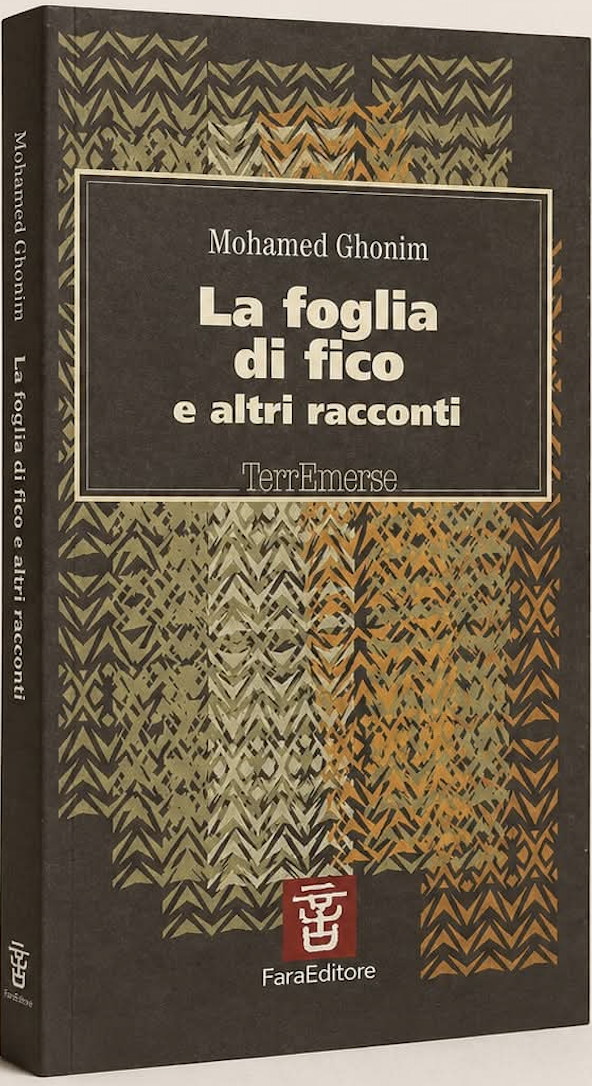
Six stories shaped by searching, inner conflict and the complexity of human relationships, between reality and symbolism.
La Foglia di Fico e altri racconti, published by Fara Editore in 1998, brings together six stories in which Mohamed Ghonim explores human unease, inner conflicts and relationships that often conceal deep tensions.
The collection’s six stories are The Bellows, Quando cade la maschera, Quella del fazzoletto bianco, The Invisible Hand, The Song of Freedom e L'opulenza. Different stories united by searching: men and women seeking a way out of their past, pursuing a goal or attempting to understand the meaning of their existence.
Nothing in Ghonim’s stories is truly static. Events are shaped by movement, change and the tension toward something not yet attained. Everyday reality becomes the starting point for a deeper narrative in which characters symbolize a universal human condition.
The collection also addresses relationships between parents and children, the condition of women and the difficulty of truly understanding others. Behind the events, a symbolic dimension leads readers beyond the surface toward the contradictions and frailties of existence.
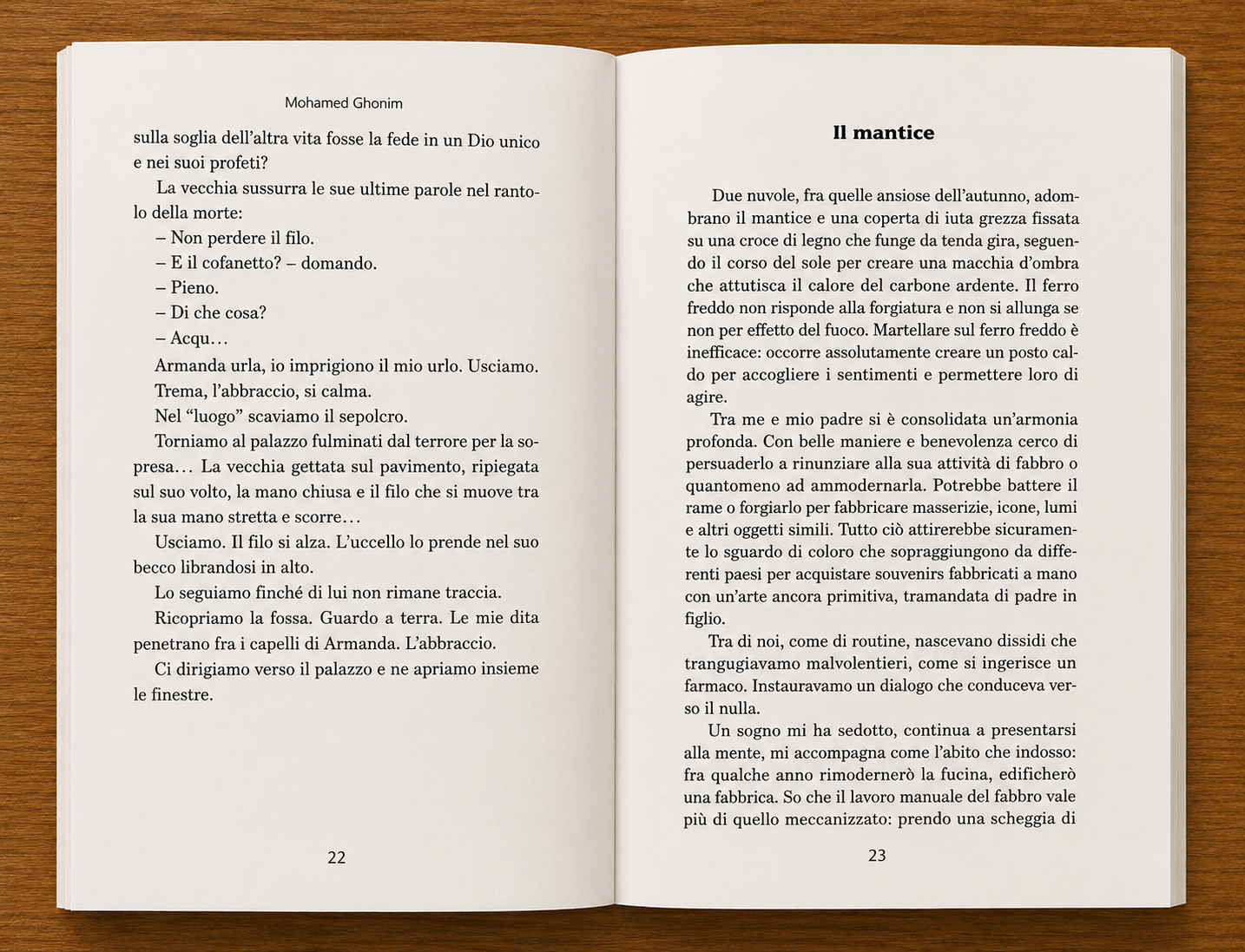
The collection draws readers into an unsettled reality where concrete events intertwine with fears, desires and inner conflicts. Everyday life gradually gives way to a symbolic universe in which the search for self also becomes a search for freedom, balance and understanding.
At the center are characters united by searching: people fleeing a haunting past and others determined to reach their goals.
The stories are shaped by movement and change. Their plots lead readers through seemingly everyday situations concealing deeper conflicts and symbolic meaning.
Themes include the relationship between father and son, difficulties experienced by women and the complexity of human relationships, where apparent serenity may conceal tension and misunderstanding.
Alongside outward events, a more intimate dimension emerges: fear, disorientation, the need to escape and, at the same time, the search for an inner place of calm and clarity.
Ghonim’s characters move through a restless world where narrative becomes a space for confronting life’s deepest questions.
The writing also opens to intercultural dialogue, bringing into Italian a sensibility connected to African culture and a desire to reveal its richness through literature.
The narrated reality is not confined to the surface: images, fears and transformations assume symbolic meaning and lead readers to reflect on the human condition and its search for freedom and balance.
The collection placed fifth at the 12th Giovanni Gronchi International Literary Competition in Pontedera.